30% van bedrijfspagina-engagement komt van medewerkers. Dit hoofdstuk behandelt hoe je een systeem creëert dat deelname makkelijk, vrijwillig en effectief maakt.
Basisprincipes van sociale media
5 min leestijd
Inhoudstafel
Een social media strategie bepalen
Een strategie implementeren
De basis van een bedrijfspagina
Je aantal volgers doen groeien
Design templates
Je werknemers inzetten
Social media analytics
LinkedIn Ads
Google My Business
Bonus: Website basics
Why employee engagement matters for your page
LinkedIn reports that 30% of company page engagement comes from employees. Employees are 14 times more likely to share company content than other types of posts. When your team engages (likes, comments, shares) they amplify your content to their personal networks, multiplying your reach without spending on ads.
But employee engagement doesn't happen by default. Most team members don't think about social media during their workday. Creating a system that makes participation easy, voluntary, and rewarding is what turns passive employees into active contributors.
Set clear, lightweight guidelines
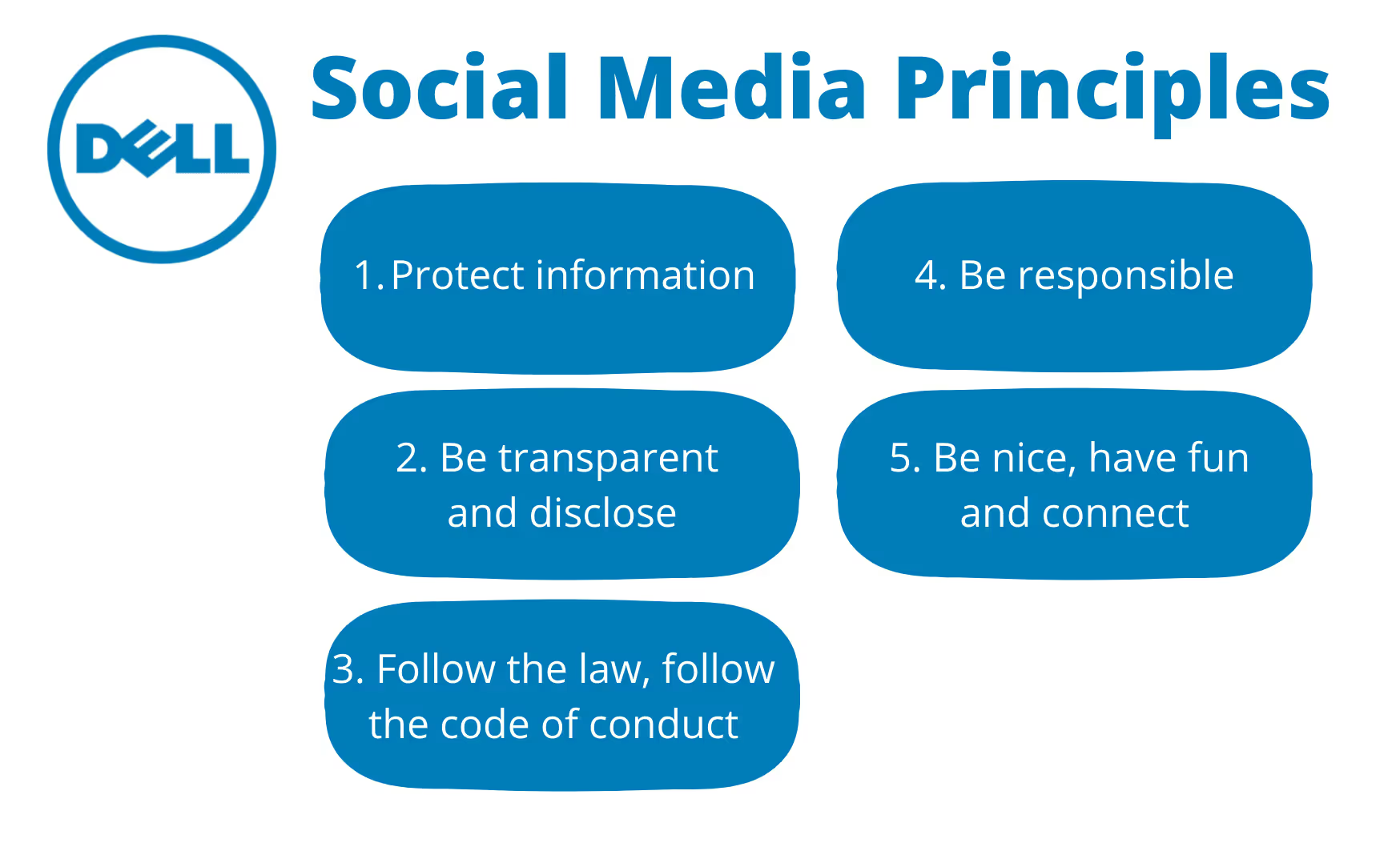
A social media policy doesn't need to be a 20-page document. A one-pager that explains what's encouraged and what to avoid gives your team the confidence to participate without fear of saying the wrong thing.
Frame it positively: "Share your expertise, celebrate your work, be yourself" rather than a list of restrictions. When employees know the boundaries, they feel safe to engage.
Godderis Accountancy got team buy-in by making expectations clear from the start. The result: steady weekly posts and stronger engagement from across the firm.
Share goals and show impact
Employees engage more when they understand why it matters. Share your social media goals with the team: are you building brand awareness? Attracting talent? Supporting a product launch? When people see the bigger picture, participation feels purposeful rather than performative.
Then close the loop. Share monthly results with your team: follower growth, engagement numbers, top-performing posts, and which team members contributed most. Willow's analytics tracks employee engagement through connected personal profiles, including a leaderboard showing who posts most and who generates the most interaction.
Seeing their impact motivates people to keep going. A team that knows their social media activity directly contributed to hiring a great candidate or landing a new client will naturally want to do more.
Make engagement effortless
The less friction, the more participation. Provide ready-made content that employees can share with minimal effort: pre-written captions, branded images, and direct links to posts.
When a new company post goes live, send a quick notification through Slack or Teams: "New post on LinkedIn. Your engagement makes a real difference." This simple prompt is often all it takes.
Willow lets you connect employee profiles and coordinate content across the team. Employees can share company content to their own networks with a few clicks, removing the biggest barrier: time.
Genscom, a team of three, scheduled over 100 posts in a year through this kind of lightweight coordination. When the tools make it easy, even small teams can maintain a strong presence.
Celebrate participation, don't force it
Advocacy works best when it feels voluntary. Pressuring employees to post creates reluctant participation and inauthentic content, which your audience can spot immediately.
Instead, celebrate the people who do engage. A shout-out in a team meeting, a mention in the company newsletter, or a small reward (a gift card, an extra afternoon off) for the most active contributors goes a long way.
Offer training for those who want to improve their social media skills. Not everyone is confident on LinkedIn. A short workshop on writing captions, building a profile, or understanding analytics can unlock participation from people who wanted to help but didn't know how.
Carbofisc and Godderis both rolled out employee advocacy successfully by combining clear guidelines with flexibility, giving their teams structure without making it feel like an obligation.