How to write an engaging caption
The image stops the scroll. The caption decides what happens next. This chapter breaks down the building blocks of captions that engage, inform, and drive action.
Social Media Fundamentals

5 min read

The image stops the scroll. The caption decides what happens next. A strong caption gives context, sparks curiosity, and drives action — whether that's a comment, a click, a share, or a follow. Without it, even great visuals underperform.
Think of your caption as the conversation that accompanies the content. It's where you explain why this matters, share your perspective, or invite your audience to respond. The professionals who write good captions consistently get more engagement from the same audience size.
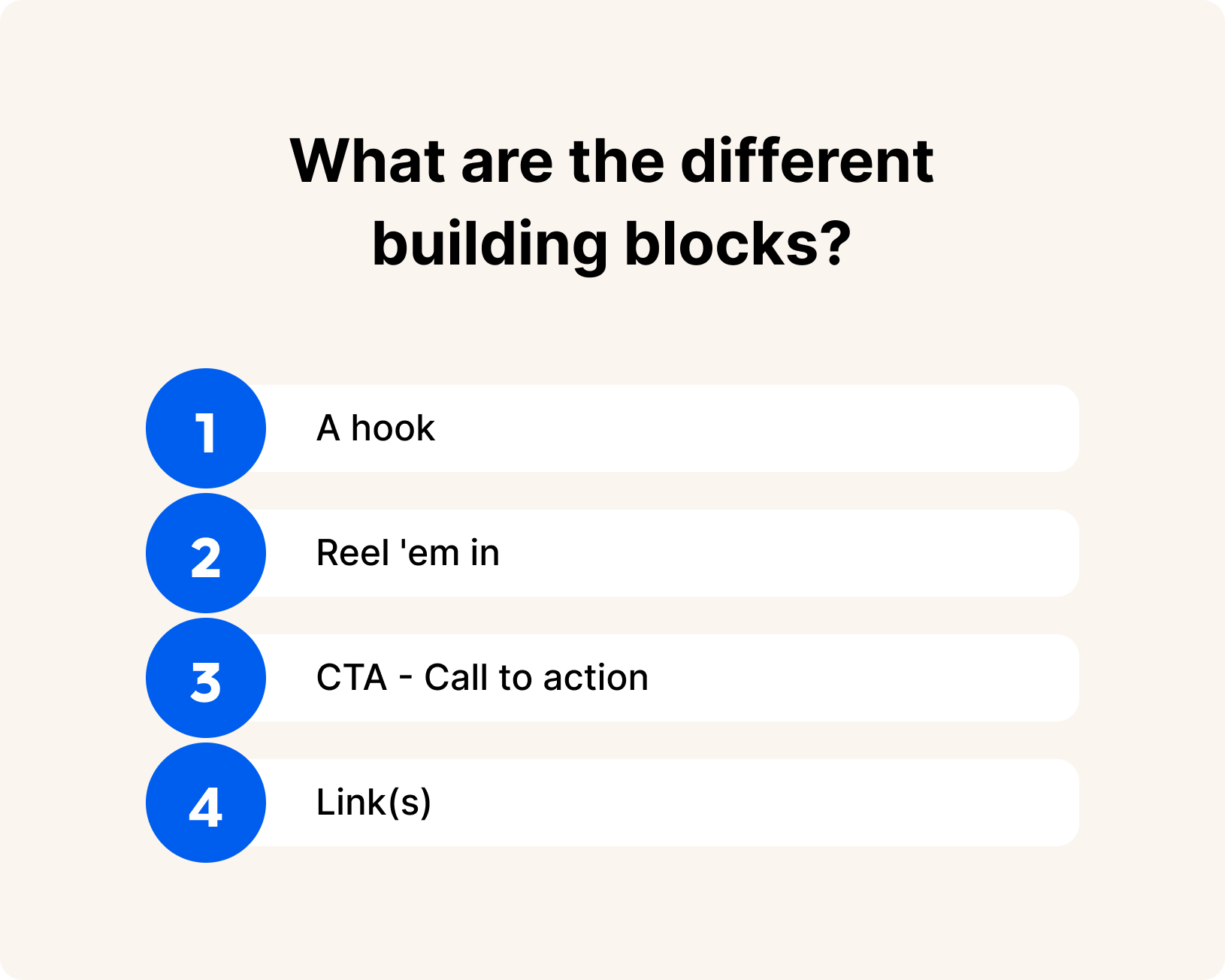
Most platforms show only the first 1-2 lines before cutting to "See more." Your hook needs to earn that click. It should make the reader curious, promise value, or challenge an assumption.
Techniques that work consistently:
Numbers: "3 things most SMBs miss at year-end" — numbers promise structure and a quick read.
Questions: "Struggling to find leads on LinkedIn?" — questions speak directly to a pain point.
Promises: "This one change doubled our engagement in two weeks" — specific outcomes spark curiosity.
Stories: "Last week, a client asked me something I didn't expect" — stories pull readers in emotionally.
Try placing your most important message or call to action before the "See more" break. Even people who don't expand the post will see it.
After the hook, deliver on the promise. This is where you educate, share a perspective, tell a story, or provide the insight your audience came for.
Use the 4 Es as a guide: Educate (teach something useful), Engage (relate to a shared experience), Entertain (add personality or humour), or Inspire (motivate or encourage). The best captions combine two or three of these.
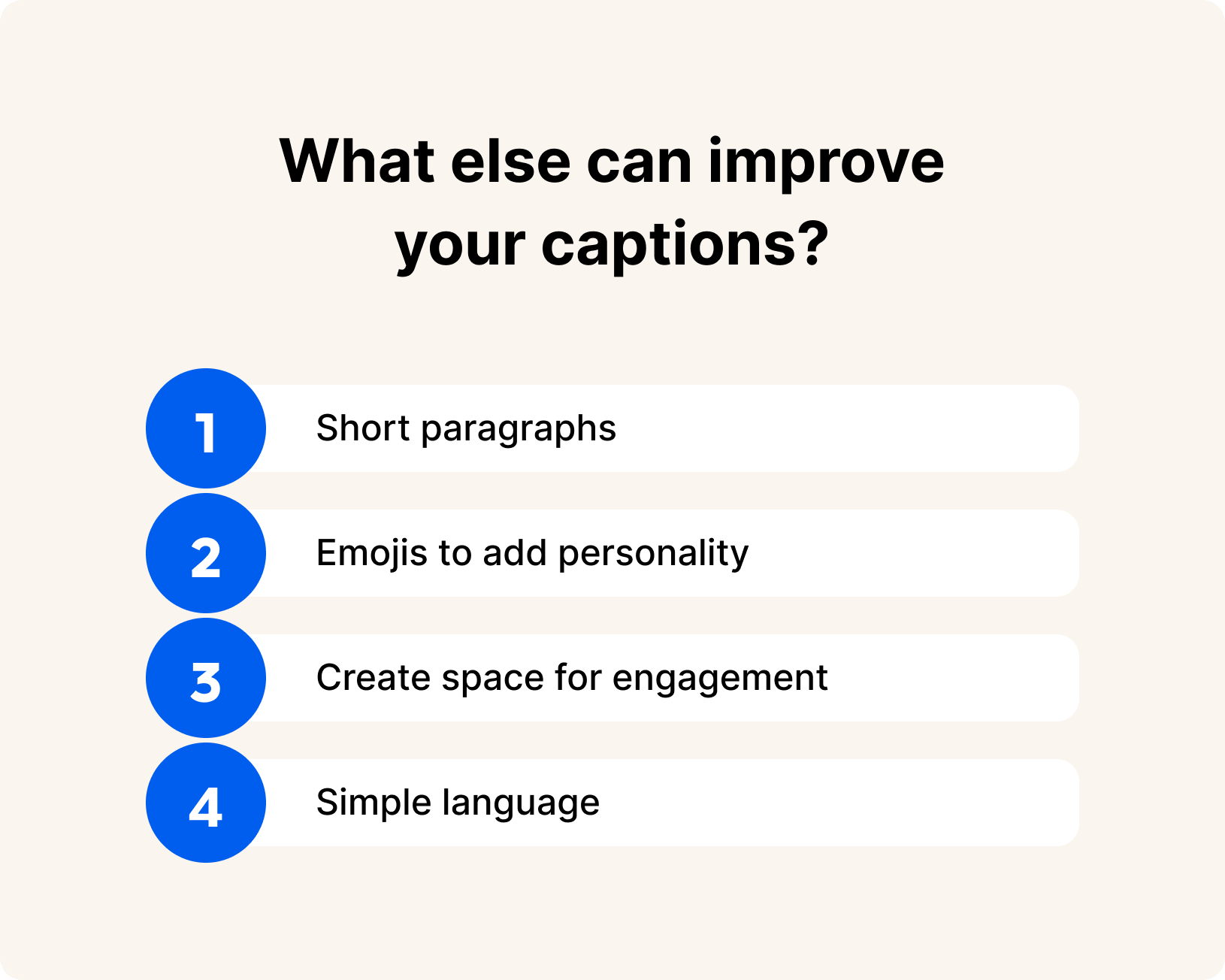
Keep paragraphs to 2-3 lines. Use line breaks to create white space. A wall of text on a phone screen is the fastest way to lose a reader.
Every caption should end with a clear next step. What do you want your reader to do?
For engagement: "What's your experience with this? Tell me in the comments." or "Tag a colleague who needs to hear this."
For leads: "Download our free guide — link in the comments." or "Book a 15-minute intro call — link in bio."
Don't be vague. "Let me know what you think" is weaker than "Do you agree, or do you see it differently?" Specific invitations get more responses.
On LinkedIn, placing links in the comments rather than the caption used to work to improve reach because the algorithm doesn't want to send people off-platform. However, LinkedIn now tends to hide those comments. So if you're link is useful and important, put it in your post anyway. On Facebook, links in the caption are fine but perform better when accompanied by a native image rather than just a link preview.
On Instagram, links don't work in captions. Direct people to "link in bio" and use a tool like Linktr.ee to host multiple destinations.
Use Willow's link tracking to measure which links get clicked, regardless of placement.
Write like you speak. If it sounds stiff when you read it aloud, rewrite it.
Use emojis sparingly: they add personality and visual structure, but too many feel unprofessional. 1-3 per post is plenty for B2B content.
Address the reader directly. "You" is more engaging than "one" or "businesses."
Avoid jargon your audience wouldn't use. An accountant writing for SMB owners should say "tax deadline" not "fiscal obligation."
Keep it concise. Say what needs saying, then stop. A caption that's twice as long isn't twice as good.